
All commercial kitchens strive to be cost-efficient, but sometimes being too money-conscious can damage service and standards. Deciding whether to repair, replace, or refurbish equipment is one of those tricky decisions. Here are some things to consider, along with examples of how Aspen Services has helped customers make the right decision for their kitchens and their budgets.

1. Repair: when keeping existing equipment makes sense
If an appliance is reliable, suitable for your needs and economical to maintain, there's little reason to replace it simply because it's getting older. Regular servicing can extend the useful life of commercial kitchen equipment, while timely repairs can prevent minor faults from becoming more expensive problems.
But repeated breakdowns, expensive replacement parts and disruption to service can change the calculation. Before authorising another repair, consider the cost of keeping the appliance running, including maintenance, downtime and the likelihood of further failures.
If you're repeatedly paying to fix the same appliance, it may be time to consider a replacement.
2. Replace: when individual equipment is holding you back
Sometimes the kitchen layout works well, but particular appliances or storage arrangements no longer meet the business's needs.
At Tops Day Nurseries in Wimborne, Aspen encountered a former pub kitchen where some equipment remained serviceable, but other items were outdated or unsuitable. Existing walls also couldn't support the shelving required.
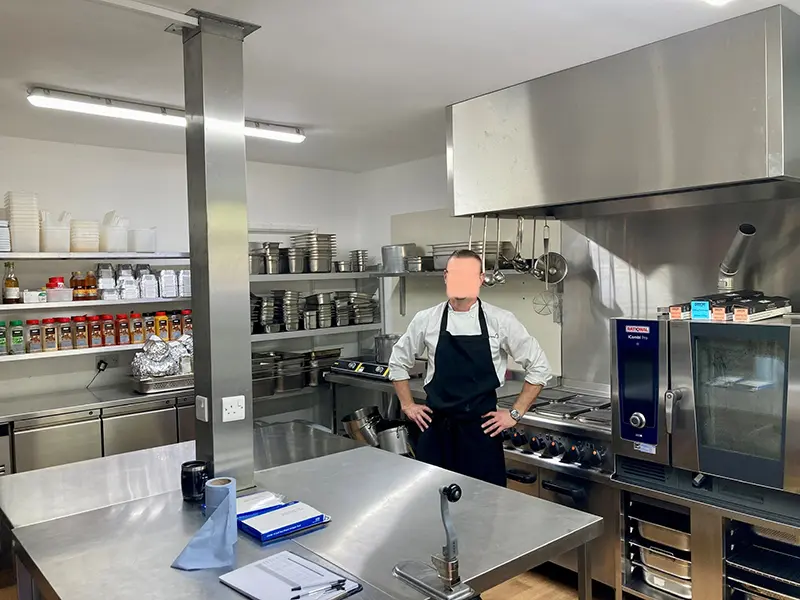
Tops Day Nurseries is a great example of how a kitchen can be transformed in just five hours
Aspen selected equipment and fittings around the nursery's requirements, including Foster refrigeration, modular racking, bespoke stainless steel workstations and a Rational iCombi Pro. The bulk of the installation was completed in just five hours, outside normal nursery operating hours.
The project shows the value of reviewing what a kitchen actually needs before choosing replacement equipment. Purchase price is only one consideration. Capacity, running costs, available space, utility connections and compatibility with existing facilities can all influence which equipment is most suitable.
3. Refurbish: when the problem is bigger than individual appliances
If staff are constantly working around an awkward layout, storage is inadequate or the kitchen can't accommodate changing demand, replacing individual appliances may only solve part of the problem. A refurbishment gives you the opportunity to reconsider the layout, equipment and working areas together.
The Merry Monk: refurbishing without replacing everything
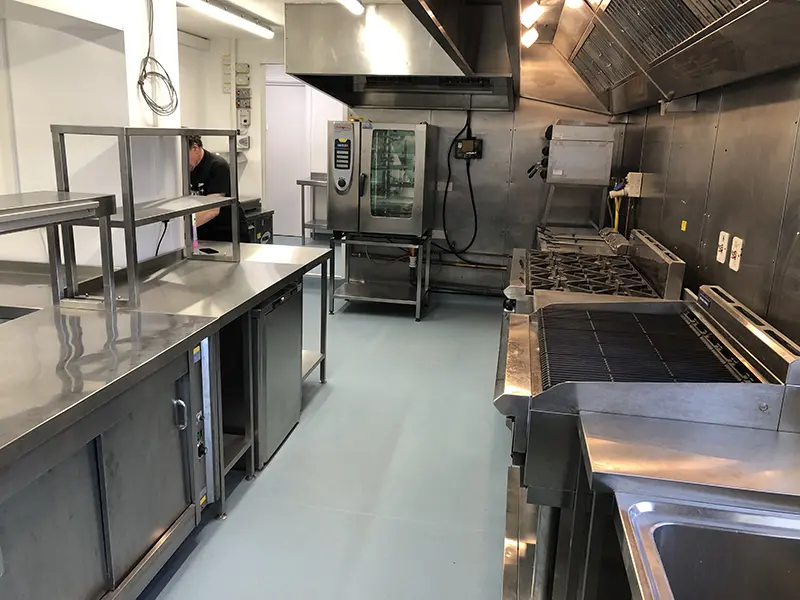
The Merry Monk: from shell to fully refitted kitchen in just two weeks by combined new and older equipment.
At The Merry Monk in Monkton Heathfield, Aspen was tasked with modernising the kitchen within a tight two-week schedule.
The project involved renewing floors and walls, extending the extraction canopy and installing new equipment to improve ergonomics and practicality.
Some existing equipment was still serviceable, so Aspen retained and reinstalled it rather than replacing everything.
The team also prepared some equipment and fabrication work off-site, helping to complete the project ahead of schedule and minimise disruption to the pub.
The result was a modernised kitchen that made use of existing equipment where appropriate, while addressing the areas that needed improvement.
The Peppermill Hotel: adapting a kitchen to new business needs
Sometimes refurbishment is driven by growth rather than failing equipment. At The Peppermill Hotel in Devizes, the business wanted to expand its catering facilities to support a new function room, additional accommodation and a tapas-style lunchtime menu.
Aspen transformed an existing ground-floor space into a multi-purpose kitchen, including new ventilation, extraction, services and bespoke fabrication.
The Grade II listed building presented additional challenges, including structural restrictions and the need to preserve its appearance.

Growth at The Peppermill Hotel required more modern equipment to suit the plans of the kitchen
The project required a complete rethink of the existing space to accommodate the hotel's expanding catering requirements.
Making the right investment
Before deciding whether to repair, replace or refurbish, consider:
What's causing the problem? Is it a failing appliance, insufficient capacity or a kitchen layout that's no longer suitable?
What's worth keeping? Some equipment may still be reliable and suitable, even if other parts of the kitchen need attention.
What will you need in the future? Are you planning changes to your menu, capacity or the way your kitchen operates?
How much disruption can you accommodate? Repairs, equipment replacement and refurbishment all have different implications for your day-to-day operations.
The Tops Day Nurseries and Merry Monk projects show how careful planning can reduce disruption, while The Peppermill Hotel demonstrates the importance of designing around a business's changing requirements.
Talk to Aspen about your commercial kitchen
Aspen Services provides commercial kitchen design, equipment supply and installation, refurbishment, and servicing and maintenance.
Whether you're dealing with unreliable equipment or considering more substantial changes, our team can discuss your requirements and help you decide how best to proceed.
Get in touch with Aspen Services to discuss your commercial kitchen.
For more advice, read Commercial Kitchen Refurbishment: 5 Reasons Why Waiting Could Be Costing You.