
Commercial kitchen asset compliance: how to reduce risk and downtime
Commercial kitchen asset compliance isn’t just about avoiding the obvious safety risks. It’s also about ensuring your kitchen stays operational and avoids potentially ruinous closures and breaks in service. Drawing on real Aspen Services projects, this guide explains what commercial kitchen operators need to consider and do to ensure they’re practising good asset management.
In practice, commercial kitchen asset compliance means understanding what equipment you have, whether it is suitable for the environment, what maintenance or testing it needs and whether you have sensible systems in place to keep it safe and operational.
For restaurants, hotels, schools, care homes and other commercial kitchens, getting this right is not simply about paperwork. Poorly maintained or badly specified equipment can cause breakdowns, disrupt service, increase costs and create safety risks.
Is it the right equipment to begin with?
Asset compliance begins before equipment is even installed. A commercial kitchen might include cooking equipment, refrigeration, warewashing, preparation machinery, extraction systems and electrical appliances from several different manufacturers. The equipment needs to be suitable not only for the task itself, but also for the environment and standards the business is working within.
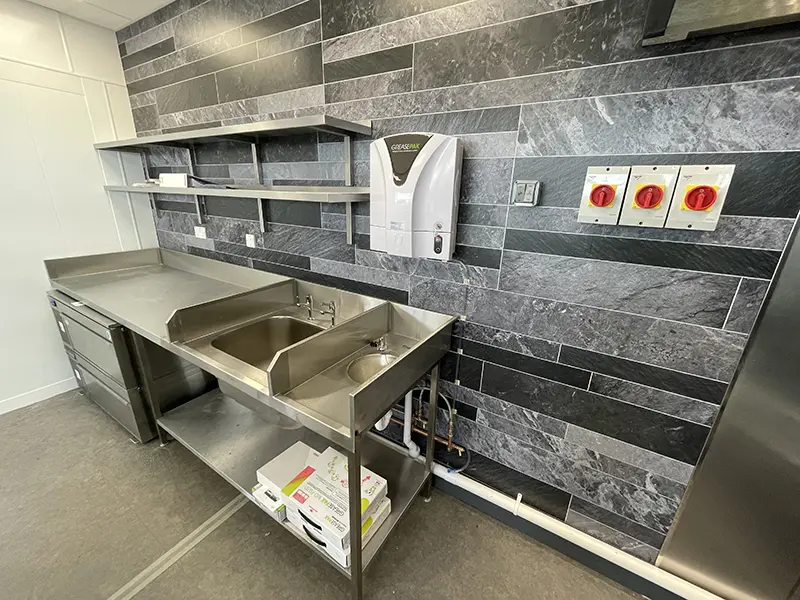
A very specific environmental brief significantly increased the complexity of Somerset Energy Innovation Centre’s commercial kitchen
Aspen’s work at the Somerset Energy Innovation Centre is a good example. The kitchen had to meet the environmental requirements of a BREEAM Excellent building, with ISO and HACCP considerations affecting the equipment and design specification. That meant selecting equipment around the standards of the site, not simply choosing what would fit the space.
Compliance depends on the environment
A commercial kitchen in a restaurant may face different practical requirements from one in a school, industrial site or nursery.
Aspen’s project for Tops Day Nurseries demonstrates the point. The kitchen needed to take account of HACCP requirements alongside Health & Safety and the safeguarding requirements of a childcare environment. Existing equipment was assessed to determine what could continue to be used, while new equipment, storage and bespoke fabrication were selected around the needs of the site.
This is why asset compliance is difficult to reduce to one generic checklist. The right approach depends on how and where the equipment is actually being used.
Keep useful maintenance records
Good records are non-negotiable. But good asset records do more than just ‘tick a box’. They can help you see:

The childcare brief at Tops Day Nurseries added another layer of safety and compliance requirements
When equipment was last serviced
What repairs have been carried out
Whether a fault is recurring (and needs investigating - is it an equipment failure or user error?)
What parts have been replaced
When further maintenance may be needed.
They also make it easier to budget for repairs and replacements rather than treating every failure as an unexpected expense.
Keep equipment properly maintained
The Provision and Use of Work Equipment Regulations 1998 place responsibilities on businesses to ensure work equipment is suitable and maintained in a safe condition.
The right maintenance schedule will vary depending on the equipment, how heavily it is used, the manufacturer’s recommendations and the risks associated with failure. That does not mean every appliance needs exactly the same annual service schedule. The important point is that maintenance should be planned rather than left until something stops working.
For a busy commercial kitchen, the cost of a breakdown is rarely limited to the repair itself. Lost service time, spoiled stock and emergency call-outs can make reactive maintenance significantly more expensive.
Make sure the services behind the equipment are right
Compliance is not only about the appliance itself. The electrical, gas and water services feeding that equipment also need to be correct.
During Aspen’s work at Somerset County Cricket Club, the available kitchen space was reduced during construction. The layout had to be redesigned while retaining the original specification, and the electrical, gas and water services were then checked and coordinated against the revised plan before installation.
That is a useful reminder that safe, reliable equipment depends on correct specification and installation as well as ongoing maintenance.
Use competent people for specialist work

Kitchen space restrictions during contruction means the kitchen at Somerset County Cricket Club had to meet the highest standards
Not every maintenance or installation job should be handled in-house. Gas, electrical and specialist catering equipment work all require appropriate competence. Engineers who understand commercial kitchen equipment are also more likely to identify developing problems before they become expensive failures.
That makes professional servicing part of both safety management and sensible asset management.
Pay particular attention to gas and electrical equipment
Gas-fired catering equipment carries obvious safety implications. Servicing, installation and repair work must be carried out by suitably qualified people, and equipment should be maintained appropriately for the way it is used.
Electrical safety also needs a sensible, risk-based approach. One common misunderstanding is that every appliance must automatically undergo PAT testing every year. In reality, the appropriate inspection and testing regime depends on the equipment, how often it is used and the environment in which it operates.
The objective is not to collect stickers and certificates for their own sake. It is to have a system that keeps equipment safe and identifies problems before they become serious.
Asset compliance is really about keeping control
Commercial kitchen asset compliance does not need to become a mountain of paperwork. At its simplest, it means specifying equipment correctly, installing it properly, understanding what maintenance and inspection it requires, keeping useful records and dealing with problems before they become expensive failures.
A well-managed approach can help improve reliability, protect the lifespan of valuable equipment and reduce the risk of disruption to your operation. Aspen Services provides commercial kitchen servicing and maintenance support, including planned service packages, reactive repairs, PAT testing and commercial gas work.
If you would like help reviewing the maintenance needs of your commercial kitchen equipment, contact the Aspen Services team.